


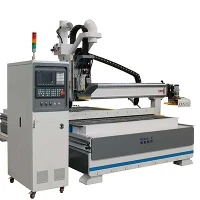
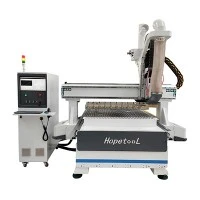


4 Axis CNC Router
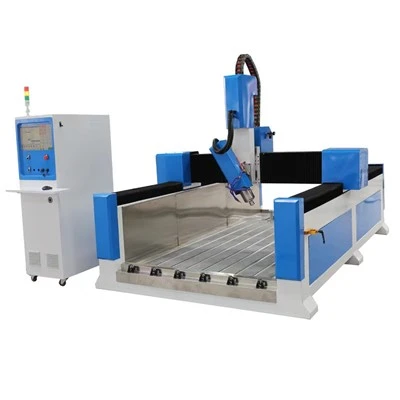
In a 4 Axis CNC router, the spindle travels along three axes: up and down, side to side, and back and forth, while the workpiece remains stationary on the machine table. The 4-axis CNC machining further rotates along the X-axis, also known as the A-axis.
Enhanced Precision
By incorporating multiple axes of movement, high-precision 4 axis CNC router machining techniques allow for more complex and intricate operations. The simultaneous movement along different axes enables the cutting tool to approach the part from various angles, resulting in greater accuracy and precision.
Furthermore, 4 axis CNC router machining eliminates the need for multiple setups and part repositioning. The elimination of manual repositioning also ensures consistent part quality and dimensional accuracy throughout the production process.
Greater Efficiency
Manufacturers can reduce cycle times and perform multiple machining operations simultaneously with multi-axis CNC machining, maximizing their productivity. Instead of removing and repositioning the part for subsequent operations, multi-axis machines can access multiple sides and angles without interruption. This streamlines the machining process, reduces idle time and maximizes the utilization of the machine.
As another factor that makes it so efficient, 4 axis CNC router machining minimizes the need for manual intervention. Once the initial setup is complete, the machine can autonomously execute complex operations, reducing the reliance on human operators.
Complex Geometries and Intricate Designs
The versatility of 4 axis CNC router machining for complex parts makes it much easier to produce intricate designs. This capability allows for the creation of precise 3D shapes, contours and profiles that would be challenging or impossible to achieve with traditional machining methods.
Multi-axis CNC machining excels at machining undercuts and hard-to-reach areas. The simultaneous movement of the cutting tool along multiple axes enables it to reach challenging features and contours without the need for manual repositioning.
Improved Surface Finish
Another advantage of multi-axis CNC machining is the improved surface finish it offers. The smooth and continuous movement along multiple axes reduces the occurrence of machining marks and tool marks on the part. The enhanced surface quality achieved through multi-axis machining is particularly beneficial for parts that require attention to aesthetics or have functional requirements related to friction, wear or fluid dynamics.
Versatility and Flexibility
Multi-axis CNC machining exhibits versatility and flexibility, making it suitable for various materials, part sizes and geometries. Multi-axis machines work well on many materials, including metals, plastics, composites or exotic substances. This adaptability allows manufacturers to explore new materials and push the boundaries of part design and performance.
Additionally, multi-axis CNC machines can accommodate parts of different sizes and complexities. From small, intricate components to large-scale structures, the flexibility of multi-axis machining enables the production of diverse parts without the need for significant reconfiguration or investment in specialized equipment.


Quality Services
Our team is committed to delivering high-quality services to our clients. We use the latest technologies and tools to ensure that our services exceed your expectations.
Quality
We offer high quality services and products that are relatable and resonate with your business needs.
Experience And Expertise
Our company has been in business for many years and has amassed significant expertise and experience to provide quality services to our clients.
Competitive Pricing
We offer competitive pricing for our services without compromising on quality.
Certifications And Quality Standards
Choose a factory that adheres to industry standards and certifications to ensure product safety and quality.
Applications of 4 Axis CNC Router
Tool And Die Making
Manufacturers use 4 axis CNC router to produce molds, dies and tooling components for various industries, including automotive, aerospace and consumer goods. The versatility and flexibility of multi-axis machining enable the creation of complex cavity geometries, sharp corners and undercuts, ensuring the accuracy and durability of the tooling used in production processes.
Automotive Manufacturing
In the automotive industry, 4 axis CNC router is widely employed for producing engine components, transmission parts, chassis components and customized interiors. The technique allows for the efficient machining of complex shapes, contours and undercuts found in engine blocks, cylinder heads, crankshafts and other critical automotive parts.
Medical Device Production
The medical device industry relies heavily on multi-axis CNC machining to manufacture intricate and precise components. These machines produce customized medical devices with exceptional precision, including everything from orthopedic implants and surgical instruments to prosthetics and dental appliances. The ability to machine intricate features, tight tolerances and complex geometries ensures the quality, reliability and functionality required in the medical field.
Aerospace And Aviation Industries
The aerospace and aviation industries demand high precision, complex geometries and lightweight components. 4 Axis CNC router manufactures aircraft parts, such as turbine blades, engine components, structural elements and intricate brackets.
Prototyping and Rapid Manufacturing
Multi-axis CNC machining allows for quick turnaround times, low-volume production runs and the creation of functional prototypes. The ability to rapidly produce complex shapes, fine details and varied geometries makes multi-axis CNC machining ideal for iterative design processes and accelerated product development cycles.
Customized and Intricate Components
Beyond specific industries, multi-axis CNC machining caters to a broad range of applications requiring customized and intricate components. From jewelry and electronics to architectural elements and artistic pieces, the precision and flexibility of multi-axis machining empower manufacturers to meet the demands of diverse markets.

Limitations of 4 Axis CNC Router
Size Limitation
Any particular 4 axis CNC router will have a limitation on the size of the part that can be machined using it. This size usually depends on the maximum travel distance of the tools and the size of the enclosure.
Operator Skill
CNC mills require operators to have a good skill set. A small operator error can lead to significant deviations in accuracy and design problems in the later stages.
Cost
Some users see the relatively high initial cost of a 4 axis CNC router as a limitation of the method. However, it should be noted that the high cost also brings several benefits, such as accuracy and precision CNC machining, which other alternatives do not provide.
Types of 4 Axis CNC Router
Industrial CNC Routers
Industrial CNC routers comprise more than 80 percent of CNC routers in circulation. Many carpentry and woodworking companies use several of these larger machines to produce furniture, cabinets, and doors etc. They are heavy-duty machines built for long hours of operation and harsh industrial conditions.
This is a general category in the CNC routers sphere. Industrial CNC routers make up a large percentage of the routers in use today.
Woodworking firms own several of these units to produce the bulk of their products, such as signs, doors, and furniture.Industrial CNC router machines are the most expensive and the largest. They can handle harsh conditions and work for long hours non-stop, making them suitable for a profitable business.
Industrial CNC router models, such as the Cobra Elite Series, come with several features that help maximize efficiency, including:
● Dust collector systems
● Heavy-duty steel construction
● Automatic tool changing
● Large table sizes and custom sizes are available
● A complete user interface
● Free lifetime tech support
● Fast cutting speeds
● Mid-Range CNC Routers
● Mid-range CNC Routers
● Mid-range CNC models have the same internal components, precision, and accuracy as their big brother counterparts. But they are smaller and lighter.
These mid-range units run from 4-foot by 4 – foot to 5-foot by 10-foot layout. Mid-range CNC routers are a popular choice for businesses that have fewer production demands.
Desktop CNC Routers
These small CNC routers are suitable for the enthusiast, a small business, or school.
Desktop CNC routers come with a mini table controlled via a computer controller. These units are ideal for small workshops or personal setups. Consider the workpiece material and size, speed, and accuracy with which the work will be done when choosing a desktop CNC router.
Multi-Axis CNC Routers
All CNC routers come with three axes to cut three dimensions. But some applications require more flexibility offered by 4- and 5-axis CNC routers.
A 4-axis CNC router means the spindle can rotate an extra plane or a turntable attached to the cutting bed. 5-axis CNC routers have a spindle that rotates two extra planes.Choose 4- or 5-axis CNC routers if your project involves cutting a true 3D part.
How to Maintain a 4 Axis CNC Router
Custom Schedule Maintenance Tasks
Each facility will be different when it comes to preventive maintenance requirements. Schedule your maintenance tasks not only around OEM guidelines but around your facility's actual usage. If you have a set of critical pieces of equipment that run around the clock, be sure to schedule preventive and equipment maintenance on those frequently. On the other hand, machines that are seldom used may require only an occasional inspection.
You may need to consider your available labor as well. If you use an outside maintenance company, you'll have to work around their availability. If you have an internal team, be sure to consider skill levels and other priorities.
Important preventive maintenance benchmarks:
Daily:
● Check the hydraulic pressure and fluids, making sure they're operating at the right levels
● Check lubrication operating levels, and replenish if necessary
● Make sure the cooling unit is operating correctly
● Clean off the window, door, and light of the machine so you can see clearly inside
Weekly:
● Take the filter of the control cabinet and clean it to allow air to flow through for cooling
● Every 3 Months or 500 Hours:
● Grease the chains or conveyors
● Check and clean the coolant filters
● Every 6 Months or 1000 Hours:
● Clean the coolant tank and the radiator
● Drain and clean the hydraulic tank, and replace filters
● Drain and clean the lubrication unit
● Check and adjust the leveling of your machine
Annually or Every 2000 Hours:
● Inspect headstock, tailstock for taper
● Check spindles and cylinders for alignment and run out
● Run backlash programs on X and Z axes and adjust as needed
Of course, these tasks will vary depending on the type of machinery or desired preventative maintenance outcomes. These are simply points to get you to start thinking about how you can better maintain your 4 axis cnc router with a preventative maintenance program!
Provide Channels for Reporting Issues
Although scheduled preventive maintenance, as well as automated sensors and detectors, are great at flagging potential problems, don't forget to use the technicians who are on the front lines of your equipment every day. Be sure you have an easy-to-use system for reporting anything they might see while performing daily tasks. If they sense that equipment is louder than normal, running more sluggishly, or just that something seems amiss, they should be able to report that as soon as possible so it can be factored into future preventive maintenance planning.
Keep Spare Parts Handy
Although it's true that you don't want to have a large number of unused parts sitting around, you'll want to have key components of your 4 axis cnc router handy in case of breakdown. Prioritize hard-to-source parts or things that need regular replacement, and be sure to have a system to find them quickly.
Maintain Good Records
A preventive maintenance system is only as good as the information in it. Be sure that anytime a machine is inspected, serviced, or replaced, that information is documented. Complete records can be critical in evaluating true maintenance costs, deciding when to replace equipment, and during audits. Strong records also provide a basis for making other business decisions.
How to Select the Best 4 Axis CNC Router for Your Shop
Determine Your Needs
Consider the specific requirements you have for your hobby CNC router. Think about the materials you want to use, wood, plastic, metal, etc., Think about the size and complexity of the projects you want to undertake, and any specific features or capabilities you require.
Set A Budget
How much you are willing to spend on a hobby CNC router. Prices can vary significantly depending on the size, brand, and features of the machine. Having a clear budget in mind will help you narrow down your options.
Research Available Options
Look for 4 axis cnc routers that meet your needs and fall within your budget. Read product reviews, visit online forums, and consult with other hobbyists or experts to gather information about different brands and models.
Consider Machine Specifications
Pay attention to important specifications such as cutting area (the maximum size of the material the router can handle), spindle power (the motor that rotates the cutting tool), spindle speed (rotations per minute), accuracy, and repeatability. These specifications will affect the type and quality of work you can achieve with the machine.
Evaluate Construction And Build Quality
Look for a 4 axis cnc router that is well-built and sturdy, as this will contribute to its longevity and performance. Check components used, overall construction quality, and accuracy rating.
Software Compatibility
What software is compatible with the 4 axis cnc router? Some machines require proprietary software, other require subscriptions that lock you into the software without the benefit ever owning the software. Ensure that the software is user-friendly and suits your skill level.
Accessibility And Support
Check if the manufacturer provides proper customer support, including technical assistance, troubleshooting guides, and access to spare parts. It's essential to have support available when you need it, especially as a beginner.
Seek User Feedback
Read user reviews and testimonials to get an idea of the experiences others have had with the 4 axis cnc router models you are considering. Real-world user feedback can provide valuable insights into a machine's performance, reliability, and ease of use.
Consider Future Growth
Think about your long-term goals and whether the 4 axis cnc router you choose can accommodate your future needs. If you anticipate expanding your projects or working with more complex materials, consider a machine with upgrade options or expandable features.
Our Factory
Jinan Hopetool CNC Equipment Co., Ltd. is a professional company specializing in developing and manufacturing different kind laser machine, include: CNC router, laser machine, digital cutting machine. Our company builed on 2008, after 14 years hard work, our machines have been exported to more than 80 countries, and we have established regular business relationships with many distributors from many countries.


Our Certificate
CE, ISO, Patent certificate

Asked Questions
Q: What can a 4 axis CNC router do?
Q: What is the difference between 3-axis and 4 axis CNC router?
Q: What is the lifespan of a CNC router?
Q: What are the limitations of 4 axis CNC?
Q: Why are CNC routers so expensive?
Q: How deep can a CNC router cut?
Q: Can a CNC router cut through wood?
Q: Can you use a CNC router as a mill?
Q: What is the Z axis on a CNC router?
Q: What is the maximum number of axis a CNC machine is?
Q: How many axis can a CNC mill have?
Q: How noisy is a CNC router?
Q: Is there a 7 axis CNC?
Q: What is tool zero in CNC?
Q: Is it cheaper to build or buy CNC?
Q: How hard is it to build a CNC router?
Q: What is the rule of thumb for CNC?
Q: Can a CNC router cut plywood?
Q: Can CNC routers cut glass?
Q: Can you use a CNC router as a planer?