


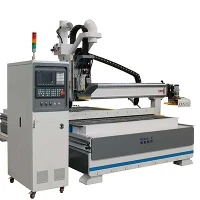
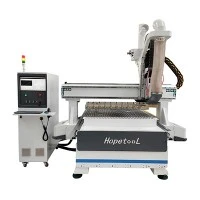


Laser Marking Machine
Laser marking machine is the practice of using lasers to engrave an object. Laser marking, on the other hand, is a broader category of methods to leave marks on an object, which in some cases, also includes color change due to chemical/molecular alteration, charring, foaming, melting, ablation, and more.
Benefits of Laser Marking Machine
Better Quality
One of the major benefits of using laser engraving is that it allows you to brand your products with high-quality markings. Spending on a laser marking machine is a big decision, and when you make an investment like that, you want to see visible results. The beam used in laser marking machines is computer-driven, which means every mark it is printing will be precise. I can also allow you to print complex designs and engraving that would not be possible with conventional methods. You can also print small text on your products or machines, and it would still be easily readable.
Competitive Edge
Another benefit of using laser engraving is that it can help you add uniqueness to your brand. In today's market, the competition is quite tough, and if you want to get ahead of the competition, you will have to gain an edge over your competitors. Laser machines allow you to get creative with your engravings, and you can make your branding look attractive, which can add more quality to your products. It also makes the products traceable, and you can track the inventory more efficiently.
Super-Fast Engraving
The laser engraving method is quite fast and can help you save a lot of time. With conventional engraving methods, you have to use a specific set of tools and have to be very careful as well, and that can be time-consuming. Laser engraving, on the other hand, simply needs command, and it will get the job done without any complications or wasting any time. This can speed up the company's processes and can save them a lot of money as well. The faster you will get things made, the more profits your business will make.
Accuracy
If you want to do engravings on expensive products or machines, then you will have to tread carefully. Just one tiny mistake, and you will damage the whole product, which is something no one wants. With laser printing, you don't have to worry about any of it. The engravings will be precise, and there will be no danger of damaging the product.


Quality Services
Our team is committed to delivering high-quality services to our clients. We use the latest technologies and tools to ensure that our services exceed your expectations.
Quality
We offer high quality services and products that are relatable and resonate with your business needs.
Experience And Expertise
Our company has been in business for many years and has amassed significant expertise and experience to provide quality services to our clients.
Competitive Pricing
We offer competitive pricing for our services without compromising on quality.
Certifications And Quality Standards
Choose a factory that adheres to industry standards and certifications to ensure product safety and quality.
Factors To Be Included In Evaluating The Correct Laser Marking System
Moving or stationary marking surfaces
If you need a machine to be included into a processing line for continuous processing of parts, models that can accord part marking of moving parts, at a pre-determined speed are a great choice as they provide high in-process efficiencies.
Line speed
Due to the varying properties of laser wavelengths and power, different systems will give different results depending on the speed with which part production is happening. High speed production lines will need high wattage markers in order to effectively mark all in-process parts.
After Sale Services Provided
Sometimes, machine set up and operation can be tricky. Though most laser marking machines are relatively low maintenance with long lives, working with a supplier who has local expertise or who can provide instant assistance is a good consideration when choosing which equipment to buy.
Environmental conditions
Some machines are sensitive to work environments that have a high propensity for dust, shock and vibrations, while others are robust and can withstand these environments.
Expected Workload
Some laser machines are low speed, and may not work well with high workloads. For example, when marking metals, it could be more cost effective in the long run to work with fiber lasers than with CO2 lasers.
Material To Be Marked
As we shall see later, laser markers can work on a wide variety of surfaces. The marker you use will depend heavily on the marked materials you want to work on. For example, fiber lasers are very good with metals, while CO2 lasers are great with non-metals.
Types of Laser Marking Machine
Fiber laser marking technology has risen in recent times to be one of the most sought after direct part marking technologies the world over.
With power levels ranging from 20-50 watts, Fiber laser marking machines are some of the most powerful laser marking machines in the market.
These machines are ideal for depth etching or engraving, with great results on harder metals or when one needs high powered systems with a smaller spot size to achieve high resolution.
High beam quality and small spot sizes with larger lenses allows fiber laser to be used for small-component batch marking applications or the cutting of very thin metals.
Green Laser Marking machines are designed to mark highly reflective materials. They also work on or highly sensitive substrates like silicon wafers, exhibiting very good work ease and high precision. They operate in the green Near-IR visible light spectrum (at 532 nm) and power ranges of 5-10 watts.
They are perfect for soft plastics, PCB Boards, Integrated Circuit Chips and for scribing or marking of Solar Cells of various material compositions.
The inherent advantages of the 532 nm wavelength include greater absorption across a many types of materials, and mitigated thermal energy allowing it to mark substrates that other higher wavelength simply cannot. Green Laser markers also give very tight spot sizes of up to 10 µm.
Ultraviolet (UV) represents a band of the electromagnetic spectrum with wavelength from 10 nm to 400 nm. They are shorter than those of visible light but longer than X-rays.
Long wavelength UV is not considered an ionizing radiation, because its photons do not have the energy to ionize atoms. However, it can cause chemical reactions that make substances glow or fluoresce.
As a result, the chemical and biological effects of UV are much wider than simple heating, and many practical applications of UV radiation are possible due to its interactions with organic molecules.
Gas lasers, solid state lasers and diodes can be used to make machines that emit ultraviolet rays, and lasers are available which cover the entire UV range.
Since the excimer laser was discovered, it has been possible to avail intense ultraviolet light. Researchers explored and uncovered the unique properties of this new light source. As various phenomena involving UV energy and material interactions were discovered and optimized, practical applications emerged.
CO2 laser marking machines are usually sealed-tube laser marking systems with galvo-steered beams designed for marking non-metal surfaces like wood, glass, quartz, and ceramics. They can also mark fabrics and other organic materials, operating at wavelengths of 10,600nm.
These machines are used to produce barcodes, serial numbers, and logos on metals and other surfaces.
When laser marking bare metal using a CO2 laser, a special marking agent (spray or paste) is used to treat the metal prior to engraving. Once the laser beam is applied, the heat from the laser bonds the marking agent to the metal, resulting in a high contrast permanent mark.
The machines are fast and affordable. They are among the oldest type of engravers and markers, and can also mark organic materials such as wood, ceramics such as tiles, stones and more.
CO2 laser systems can be operated from a wide range of applications like Windows and Linus, and are very easy to use.
Laser Marking by Annealing
In this process, a laser beam locally heats a metal surface to produce a mark. This localised heating causes structural changes in the metal and results in a colour change. The marking is usually black but it may also be red, green or yellow, depending on the temperature of the heated layers.
The laser rays only penetrate 20 to 30 µm into the metal surface. This results in an even surface of the workpiece. This type of annealing is usually carried out on ferrous metals and titanium.
Annealing marking produces permanent abrasion-proof results. A variety of industries use it. Examples include medical, dental, automotive, manufacturing, etc. An example of annealing marking is a nameplate for identifying and listing the machine's specifications.


Laser Engraving
In engraving, the laser beam removes some material from the surface. This produces a mark on the surface in the form of depressions. A large number of materials suit this process. Examples include metals, plastics, stone, and ceramics.
During laser engraving, the material absorbs heat from the laser, melts and evaporates. The material also reacts with air resulting in a colour change which makes the mark more distinctive. As there are no consumables involved, this technique has low operational costs compared to other methods that use drill bits or special inks for engraving.
Laser Marking For Leather
When it comes to marking organic materials and synthetic polymers, carbonising is the way to go. In carbonising, heat from the laser breaks plastic bonds and releases hydrogen and oxygen. Wherever this reaction takes place, the area darkens.
Since the mark formed is grey to blue-grey, carbonising is not always suitable for dark-coloured objects. This will lead to low contrast between the marked portion and the rest of the workpiece. Carbonising is used to mark wood, paper, leather, packaging material, etc.
How 8 Industries Use Laser Marking Systems
Pharmaceuticals
The pharmaceutical industry benefits greatly from the use of laser marking machines, specifically regarding capsule marking and pill imprint coding. Due to government regulations, all medications sold to the general public must feature an identifying marking that provides information on drug type and dosage (some pill and capsule markings also denote trademarks and company logos or imagery). There are several different methods for creating these imprint codes, including debossing, embossing, printing, and engraving.
However, laser marking is perhaps the most effective and efficient method for labeling pills and capsules. This technique is non-destructive, making it highly suitable for marking sensitive medications. Plus, the process is much quicker than pressing drugs or other traditional marking methods. Lastly, UV laser marking is non-contact and extremely sanitary, eliminating instances of cross-contamination during production.
Automotive
Automotive manufacturing is a complex process that's highly regulated and involves an exorbitant amount of components, equipment, and parts. UV laser marking machines are used in manufacturing to mark and identify various parts traveling along the assembly line. More importantly, laser marking is an invaluable method for safely labeling vehicle-related wires.
Why is marking automotive wires so essential to the industry? Mainly, it helps with cable management and makes maintenance work far easier for electricians. Additionally, it ensures better-assembled vehicles that are safer for the general public. Ultimately, UV laser marking machines make the manufacturing process simpler, faster, and more effective.
Aerospace
Just as with the automotive industry, laser marking machines help improve the success and efficiency of aerospace manufacturing. Furthermore, UV laser marking methods are often needed in this industry, as many aircraft components are made from unique and exotic materials that are resistant to other marking techniques.
The non-contact, non-destructive nature of UV laser marking ensures that airplane parts remain structurally sound and functional. Plus, this specific industry is heavily regulated (for a good reason!), so having a dependable, fast, and accurate method for labeling metals, plastics, and wires is paramount. Military defense manufacturers also use the same equipment as the aerospace businesses for many of the same reasons listed above.
Jewelry Making
While UV laser marking is often implemented in specific, highly-industrial environments, it is beneficial in jewelry marking applications. For instance, certain metals react poorly to engraving and other marking techniques. Plus, engraving is a slow and sometimes imperfect process that's impractical for large-scale jewelry-making operations. Since UV laser marking merely changes the properties of a given surface, it's a very safe and efficient tool for lapidaries. Additionally, this method is suitable for accurately marking tiny objects, such as pet name tags, necklace charms, ring bands, and more.
Medical device manufacturing
UV laser marking is highly useful for many different applications, but perhaps none more than medical device manufacturing. Similar to other industries on this list, medical device manufacturers are under strict government regulations to ensure the safety and well-being of patients.
UV laser marking is non-contact and highly sterile, making it ideal for creating labels on implants, catheters, and other devices. And since little heat is required, medical devices won't accidentally suffer damage during the marking process. As a bonus, the indelible marking produced by laser marking machines is durable in any environment, including inside the human body, as the imagery will never fade away.
Electronics
Plenty of engraving methods used within the electronics industry are effective, but none are as capable of labeling tiny components as UV laser marking machines. When microchips, circuit boards, resistors, and other smart electronic parts require markings, laser machines are used to produce accurate and clear results. You can even adjust the wavelength of your laser machine to mark microscopic objects successfully! And, as stated before, there's no risk of the UV laser beam damaging delicate electronic materials.
Wire And Cable
Wire and cable manufacturing is a very specific industry that, among other things, is responsible for processing many products at once. Properly labeling such a massive number of wires and cables during production requires comprehensive machinery. That's where UV laser marking comes into play; these machines are built to process many cables and wires at a quick pace without sacrificing image quality. And, of course, UV laser marking is non-destructive, especially when interacting with sensitive insulation jackets and electrical components.
Food And Beverage
UV laser marking machines are extremely useful during the food and beverage manufacturing process! Food and beverage processing plants often install laser marking machines on their assembly line. Their function is to create lot numbers, expiration codes, and other important markings on the product packaging.
These devices can label a wide array of materials, including plastic, ceramics, glass, and more. Plus, they work quickly and effectively, helping expedite the processing and manufacturing processes. UV laser marking machines are automated to further increase productivity.
As you can see, these various industries use laser marking systems in very different ways. Some utilize this technology for its efficiency and accuracy. Other businesses benefit from the non-destructive and sanitary manner of laser marking techniques. Overall, every industry that has regulated or specific manufacturing processes can benefit from installing laser marking systems in their facilities.
For some applications, such as jewelry making, a small device is all that is needed; however, large-scale operations in the medical device or pharmaceutical manufacturing sector may require more equipment. Regardless of your specific requirements, we at Tri-Star Technologies have the right laser marking machines and products. Please browse our selection today to find the perfect item for you and your business. You can also contact our friendly team for additional information on our processing equipment.
Primary Laser Marking Machine Components
Ruler Scale: This component allows precise vertical positioning of the galvanometric system. The height varies based on the different dimensions of the workpiece. The adjustment screw on top allows easy adjustment of the positioning.
Galvoscanner: This component is responsible for directing the laser beams' movement. It provides rapid and precise scanning across the material's surface. It ensures efficient and accurate marking.
Optical Path: The optical path consists of mirrors and lenses. They guide and focus the laser beam onto the workpiece. Regular maintenance of this part is essential for maintaining the quality and accuracy of laser markings.
Operating Switches: On the right side of the table, you can find some switches. These switches allow you to control the laser marking process. It also has an emergency button and a power switch. Based on different circumstances, you can manage your device using them.
Workstation: This component is a stable platform for the material being marked. It ensures proper positioning and stability during the laser marking process. The dimension of this component varies based on different models from the manufacturer.
Computer Monitor: This component provides visual services to the user. It is connected to a computer CPU that operates the laser marking software. You can design and adjust the position of the markings using the software through a computer monitor.
Keyboard and Mouse: You can find these under the working surface. Using these components, you can adjust the power settings and design on the laser engraving software.
Laser Source: This component is the heart of the laser printing machine. It generates a high-intensity laser beam. It is the foundation for the marking process. In this case, the laser source determines the type and power of the laser used. Different materials require different laser wavelengths and strengths for optimal marking quality. The laser source is critical in achieving precision and accuracy in markings.
Control System: This component manages and coordinates the entire laser marking process. It includes hardware and software components that regulate the laser's parameters. Some parameters include laser intensity, speed, and scanning patterns. This device interprets instructions from the operator and translates them into laser movements. It ensures that the laser marking machine operates consistently and accurately.
Computer CPU: We can call it the brain of the laser marking machine's control system. It runs the necessary software for designing, configuring, and executing laser marking tasks. It processes complex algorithms and coordinates data flow. It communicates with the various components of the machine and ensures seamless operation. The user interface displayed on the computer monitor allows operators to interact with the device. It also allows you to make real-time adjustments.
Other accessories: Other accessories are connected to the control system except for the above parts. These additional components include safety interlocks, exhaust systems, cooling systems, and rotary attachments.
Our Factory
Jinan Hopetool CNC Equipment Co., Ltd. is a professional company specializing in developing and manufacturing different kind laser machine, include: CNC router, laser machine, digital cutting machine. Our company builed on 2008, after 14 years hard work, our machines have been exported to more than 80 countries, and we have established regular business relationships with many distributors from many countries.


Our Certificate
CE, ISO, Patent certificate

Asked Questions
Q: How can you prevent laser hazards?
Q: How accurate is a laser marking machine?
Q: How does a laser marking machine work?
Q: What is the first rule of laser safety?
Q: What is the biggest safety issue with lasers?
Q: How long does laser marking last?
Q: Does laser marking wear off?
Q: How fast is laser marking?
Q: What is the most important rule when working with lasers?
Q: What information must be included in a laser safety procedure?
Q: What is a laser marking machine?
Q: What are the classifications of laser marking machines?
CO2 laser marking machine: uses CO2 laser as light source, suitable for marking non-metallic materials.
Semiconductor laser marking machine: Using semiconductor laser, it is suitable for marking metal and non-metal materials.
Fiber laser marking machine: Using fiber laser, it has the characteristics of high speed and high precision, and is suitable for marking metal materials.
YAG laser marking machine: Using YAG laser, it is suitable for marking metal and non-metal materials.
Q: In what fields are laser marking machines mainly used?
Q: What is the working principle of laser marking machine?
Q: How to correctly use and maintain laser marking machines?
Operating specifications: Operators should be familiar with equipment operating specifications to avoid misoperation that may cause damage to the equipment or affect the marking effect.
Regular maintenance: Clean and maintain the laser marking machine regularly, check whether all parts of the equipment are normal, and ensure the stable operation of the equipment.
Q: What is the future development trend of laser marking machines?
Q: Is laser engraving safe?
Are Laser Fumes Health Hazards? The answer to this question is a quick and resounding yes. The fumes generated by the laser cutting or engraving process contain elements and particles that are toxic to humans and other animals.
Q: Can you laser mark Teflon?
Q: Can you laser engrave glass?
Q: What is the difference between laser engraving machine and laser marking machine?