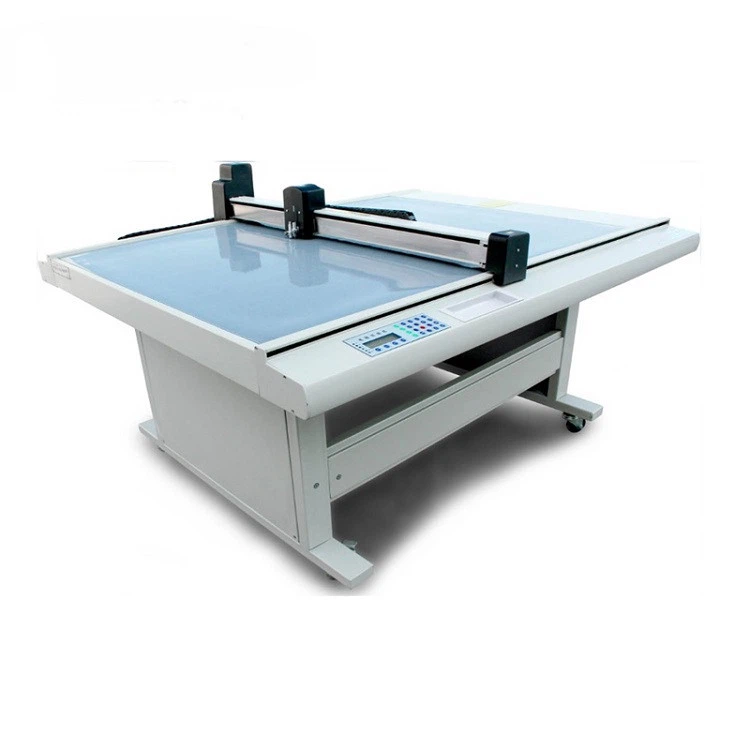
In the competitive commodity market, an eye-catching package can often attract consumers' attention and become the key to a product's success. As the preferred material for many commodity packaging, the accuracy and efficiency of the design and production process of cardboard boxes directly affect the overall image and market competitiveness of the product. As an important tool in the packaging industry, the cardboard box sample cutting machine has brought revolutionary changes to the design and production of cardboard boxes with its high-precision and high-efficiency cutting capabilities. This article will explore the working principle, core characteristics, application areas, technological innovation and future prospects of the cardboard box sample cutting machine in depth, aiming to present readers with a panoramic picture of this innovative equipment.
Working principle of cardboard box sample cutting machine
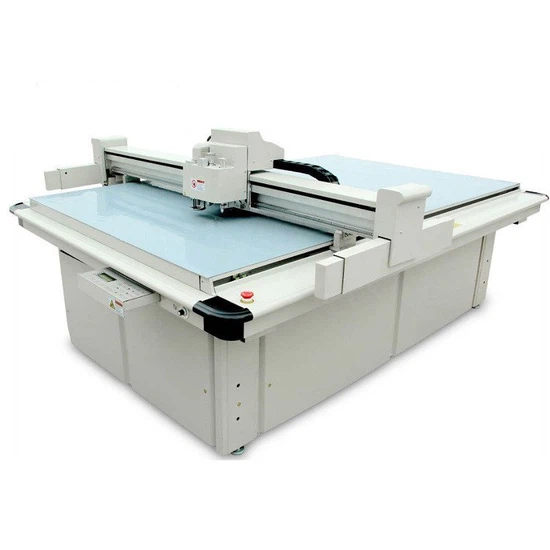
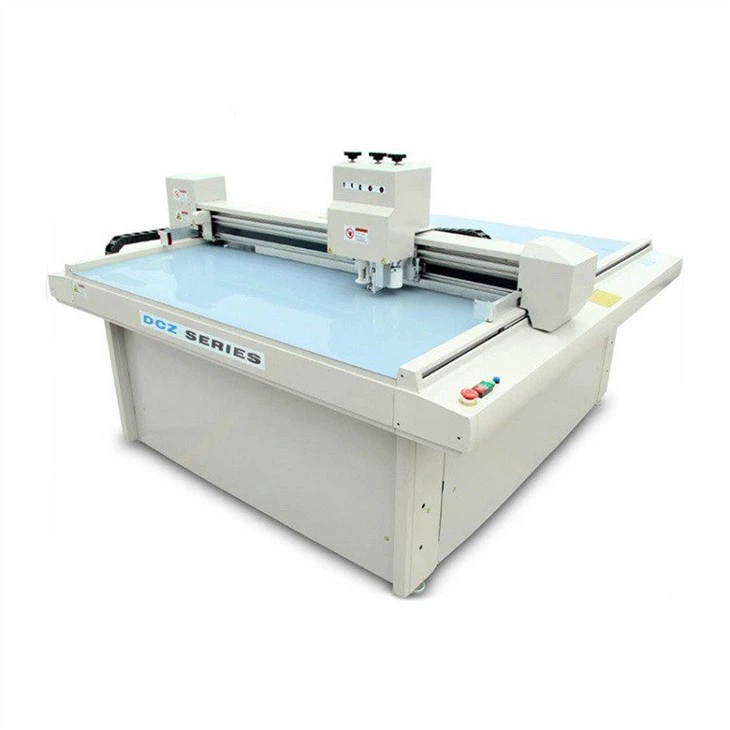
As the name suggests, the cardboard box sample cutting machine is a device specifically used to cut cardboard box samples. Its working principle is based on a computer-controlled precision mechanical system, combined with advanced cutting technology to achieve automated operation.
Control system
The cardboard box sample cutting machine receives design data through a built-in computer control system. These data are usually generated by design software and include key information such as cutting path and cutting depth. The control system converts this data into machine-recognizable instructions and drives the cutting head to perform precise operations.
Mechanical transmission
After receiving the instructions, the control system drives the motor to accurately move the cutting head through transmission mechanisms such as lead screws and guide rails. These mechanisms are usually designed with high precision to ensure that the cutting head can cut along the predetermined trajectory and achieve millimeter-level accuracy.

Cutting tools
Cardboard sample cutting machines are usually equipped with rotary blades or laser cutting heads. Rotary blades are suitable for cutting thicker cardboard materials, while laser cutting heads can achieve more refined cutting effects to meet different cutting needs.
Sensing and feedback
To ensure the accuracy of cutting, cardboard sample cutting machines are usually equipped with sensors for real-time monitoring of parameters such as the position, speed, and pressure of the cutting head. When an abnormality is detected, the control system will immediately adjust the cutting parameters to ensure cutting quality.
Core characteristics of cardboard sample cutting machine
The reason why cardboard sample cutting machine can occupy an important position in the packaging industry is due to its series of unique core characteristics:
High Precision
Thanks to the advanced control system and precise mechanical transmission mechanism, the cardboard sample cutting machine can achieve millimeter-level cutting accuracy, ensuring that the cut samples are completely consistent with the design drawings.
High Efficiency
Automated operation and efficient cutting speed enable the cardboard sample cutting machine to complete the cutting of a large number of samples in a short time, greatly improving production efficiency.
Versatility
In addition to the basic cutting function, the cardboard sample cutting machine can also perform processing operations such as punching, creasing, and folding to meet diverse production needs.
Material Adaptability
By adjusting the cutting parameters and replacing the cutting tools, the cardboard sample cutting machine can handle cardboard materials of different thicknesses and materials, showing extremely high material adaptability.
Intelligence And Automation
Modern cardboard sample cutting machines are usually equipped with intelligent control systems, supporting remote monitoring, fault diagnosis, automatic material discharge and other functions, which improves the intelligence level and automation level of the equipment.
Easy To Operate And Maintain
The user-friendly interface, intuitive operation guide and convenient maintenance design make the cardboard sample cutting machine easy to use, reducing the difficulty of operation and maintenance costs.
Application fields of cardboard sample cutting machine
The cardboard sample cutting machine has been widely used in the packaging industry with its high precision, high efficiency and versatility. Here are some of the main application areas:
Packaging design and R&D
In the packaging design and R&D stage, the cardboard sample cutting machine is used to make samples of various sizes for designers and customers to review and modify. This helps to speed up the design process and improve design efficiency.
Sample Making And Display
In the sample making stage, the cardboard sample cutting machine can quickly produce exquisite samples for display to potential customers or partners. This helps to enhance the corporate image and enhance market competitiveness.
Pre-mass Production Testing
Before mass production, the cardboard sample cutting machine is used to make small batches of samples for testing. This helps to discover potential production problems, adjust the production process in time, and ensure product quality.
Customized Packaging Services
With the increasing demand of consumers for personalized packaging, cardboard sample cutting machines are widely used in customized packaging services. By cutting cardboard boxes of different shapes, sizes and patterns, the personalized needs of customers can be met.
Education And Training
In education and training related to packaging design and production, cardboard sample cutting machines are used as teaching tools to help students master cutting techniques and design skills.
Technological innovation and development trend of cardboard sample cutting machines
With the advancement of science and technology and the continuous changes in market demand, cardboard sample cutting machines are undergoing continuous technological innovation and development. The following are some key technological innovations and development trends:
Laser cutting technology
Laser cutting technology is gradually being used in cardboard sample cutting machines with its high precision, high efficiency and non-contact processing. The laser cutting head can easily cut cardboard materials of various thicknesses, and the cutting edge is flat and burr-free, which improves the cutting quality.
Intelligent identification and positioning technology
By integrating intelligent identification devices such as cameras and sensors, cardboard sample cutting machines can automatically identify information such as material type, position, size, etc., to achieve more accurate cutting operations. This helps to reduce manual intervention and improve work efficiency.
Multi-axis linkage technology
Multi-axis linkage technology enables the cardboard sample cutting machine to perform complex shape cutting operations in three-dimensional space, such as curved surfaces, bevels, etc. This greatly expands the design and production scope of cardboard boxes and meets more diverse needs.
Environmental protection and energy-saving design
With the improvement of environmental awareness, cardboard sample cutting machine manufacturers have begun to pay attention to the environmental protection and energy-saving design of equipment. For example, measures such as adopting low-power motors, optimizing cutting parameters, and recycling cutting waste can reduce energy consumption and emissions and reduce the impact on the environment.
Cloud service and remote monitoring
Through cloud service technology, the cardboard sample cutting machine can realize functions such as remote monitoring, fault diagnosis and data sharing. This helps to improve the operation and maintenance efficiency of the equipment and reduce maintenance costs. At the same time, cloud services also provide possibilities for the intelligent upgrade of equipment.
Personalized customization service
With the increasing demand of consumers for personalized packaging, cardboard sample cutting machine manufacturers have begun to provide personalized customization services. By customizing cutting parameters, cutting tools, cutting paths, etc., customers' special needs can be met and customer satisfaction can be improved.
Maintenance
Regular Cleaning
●Importance: Dust, debris, and residue from materials can accumulate over time, affecting the cutting precision and machine efficiency.
●Steps:
Clean the cutting bed daily using a soft cloth or brush.
Remove debris from blades and moving parts.
Use compressed air to clear dust from hard-to-reach areas.
Blade Maintenance
●Importance: Sharp blades are crucial for precise cuts and preventing material wastage.
●Steps:
Inspect blades for dullness or damage weekly.
Sharpen or replace blades as needed, following the manufacturer's guidelines.
Use high-quality blades compatible with your machine model.
Lubrication
●Importance: Proper lubrication minimizes friction and wear, ensuring smooth operation.
●Steps:
Apply lubricant to moving parts like rails, gears, and bearings every two weeks.
Use manufacturer-recommended lubricants to avoid damage.
Wipe off excess lubricant to prevent dust accumulation.

Software Updates
●Importance: Updated software improves cutting efficiency, supports new designs, and enhances machine compatibility.
●Steps:
Check for software updates monthly.
Install updates provided by the manufacturer.
Back up machine settings and designs before updating.
Calibration
●Importance: Regular calibration ensures the machine maintains high cutting accuracy.
●Steps:
Perform a calibration test every month or as recommended.
Use standard calibration tools and follow the machine manual.
Adjust settings to align with calibration results.
Electrical Component Inspection
●Importance: Faulty electrical components can lead to downtime and operational inefficiencies.
●Steps:
Inspect power cables, connections, and control panels weekly.
Replace damaged wires or components immediately.
Ensure the machine is grounded properly to avoid electrical hazards.
Preventive Maintenance Schedule
●Importance: A structured schedule reduces the likelihood of unexpected breakdowns.
●Steps:
Create a maintenance log to track cleaning, inspections, and part replacements.
Follow the manufacturer's recommended maintenance intervals.
Train staff on proper handling and maintenance procedures.
Environment Optimization
●Importance: A suitable environment prolongs machine life and maintains efficiency.
●Steps:
Keep the machine in a clean, dry, and dust-free area.
Maintain ambient temperature and humidity within the manufacturer's specifications.
Avoid placing the machine near sources of vibration or direct sunlight.
Emergency Repairs
●Steps:
Identify potential issues such as abnormal noises, inconsistent cuts, or error messages.
Stop the machine immediately if an issue arises.
Contact technical support or a qualified technician for repairs.