


In the field of modern industrial manufacturing, efficient and precise cutting technology is one of the key factors to promote production efficiency and product quality. With the rapid development of science and technology, various advanced cutting equipment have emerged. Among them, plasma cutting machines have occupied a pivotal position in many industries with their unique advantages. This article will deeply explore the working principle, technical characteristics, application fields and future development trends of plasma cutting machines, and reveal how this modern industrial tool can help enterprises improve their competitiveness.

Overview Of Plasma Cutting Machine
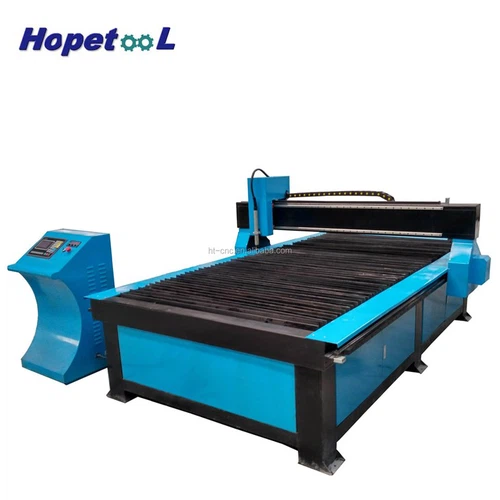
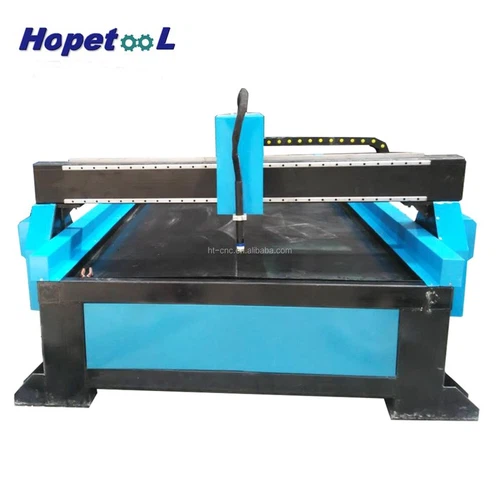
Plasma cutting machine is a device that uses high-temperature plasma as a heat source to quickly cut materials such as metals. Its basic principle is to ionize gas (usually inert gas such as argon or nitrogen, and sometimes air) to form high-temperature plasma through high-frequency arc discharge. The temperature of the plasma can reach tens of thousands of degrees Celsius, which is enough to melt and blow away the material in the cutting area, thereby realizing the rapid separation of materials. Compared with traditional oxyacetylene cutting, laser cutting, etc., plasma cutting has the advantages of fast cutting speed, small heat-affected zone, good cutting surface quality, and a wide range of applicable materials. In addition, plasma cutting machines also have good flexibility and automation potential, and are easy to integrate into automated production lines. They are one of the important tools for realizing intelligent manufacturing.
Working principle of Plasma Cutting Machine
Ionizing gas to generate plasma is the basis of the entire cutting process.
When the power is turned on and powered on, a special phenomenon begins to appear. At this time, gas, such as compressed air or stable nitrogen after purification and drying, is continuously delivered to the cutting torch nozzle. This nozzle is not an ordinary simple channel, but is carefully designed to enable the gas to form a form suitable for subsequent operations under specific conditions.
As the gas flows in the nozzle, the high-voltage arc begins to work.
The generation of this high-voltage arc is not accidental, but depends on the precise power parameter settings and the specific distance and environmental configuration between the electrode and the nozzle. Under the action of the high-voltage arc, the gas is rapidly heated and the temperature rises sharply, instantly exceeding the amazing threshold of 30,000°C. In such an extremely high temperature environment, the molecules in the gas gain huge energy, the originally stable atomic structure is broken, and the electrons break free from the constraints of the nucleus, resulting in ionization. The neutral gas is transformed into a plasma composed of a large number of free electrons, positively charged ions, and non-ionized neutral particles. This plasma has unique physical properties and its conductivity is significantly enhanced, laying a key material foundation for the subsequent cutting process.
The formation of plasma arc is the key link in the cutting process.
The DC current generated by the power supply passes through a specially designed electrode to form an arc in a specific gas environment between the electrode and the workpiece to be cut. This arc is not an ordinary electric spark. It carries huge energy, which instantly heats up the gas further and expands violently. The expansion of the gas is not only an increase in volume, but also a sharp increase in pressure, which greatly increases the kinetic energy inside the plasma. Under the strong electromagnetic force and heat, the plasma arc presents a highly concentrated state, especially at the nozzle. These high-speed and high-temperature plasma flows are like a hot sword, focusing on the surface of the workpiece with extremely high energy density. When the plasma arc contacts the surface of the workpiece, the huge heat contained in it is transferred to the workpiece in a very short time, so that the metal on the surface of the workpiece quickly reaches the melting or evaporation temperature, thereby realizing the preliminary thermal processing of the material.
The melting and cutting process of the material is the core goal of plasma cutting.
The high-speed plasma flow heats the metal on the surface of the workpiece layer by layer with its strong heat energy until it melts or even evaporates directly. During this process, the temperature, speed and contact area of the plasma flow with the workpiece surface are precisely controlled to ensure that the cutting of the material can achieve the desired effect. At the same time, the plasma flow is accompanied by a strong airflow. This airflow is like a carving knife in the hands of a skilled craftsman, which quickly blows the molten metal away from the cutting area to prevent the molten metal from re-solidifying and adhering to the edge of the cut, thus forming a clean, flat and precise cut. During the entire cutting process, the operator can flexibly control the speed and depth of the cutting by adjusting the current output by the power supply and the pressure and flow rate of the gas supply. For example, for thicker metal materials, a larger current is required to provide enough heat to melt the metal, and at the same time, a moderate gas flow rate is used to ensure that the molten metal can be blown away in time; For thinner materials, the current and gas flow rate can be appropriately reduced to ensure the accuracy and quality of the cutting.
High Efficiency
The cutting speed of plasma cutting machine is extremely fast, especially for thicker metal materials, its efficiency is much higher than traditional cutting methods. This greatly shortens the production cycle and improves production efficiency.
High Precision
Through advanced control systems and precise cutting parameter settings, plasma cutting machines can achieve high-precision cutting to meet the requirements of complex shapes and precise dimensions.
Wide Applicability
Plasma cutting machines are suitable for cutting a variety of materials, including metals such as stainless steel, carbon steel, aluminum, copper, and some non-metallic materials such as ceramics, glass, etc. (specific equipment and processes are required).
Environmental Protection And Energy Saving
Compared with traditional cutting methods, plasma cutting produces less smoke and harmful gases, and with the advancement of technology, many modern plasma cutting machines are equipped with efficient smoke collection and treatment systems, which further reduces the impact on the environment. At the same time, plasma cutting has a high energy utilization rate, which is conducive to energy saving and consumption reduction.
Automation And Intelligence
Modern plasma cutting machines are often combined with CNC (computer numerical control) systems to achieve a high degree of automation and intelligence. Users can set cutting paths and parameters through programming, and the machine can automatically complete the cutting task, greatly improving production efficiency and flexibility.
Application fields of Plasma Cutting Machine
Due to its unique advantages, plasma cutting machines have been widely used in many industrial fields:
Metal processing industry: In automobile manufacturing, aerospace, shipbuilding, heavy machinery manufacturing and other fields, plasma cutting machines are used to cut metal parts of various shapes and sizes to meet the production needs of complex structures.
Architecture and decoration: In architectural decoration and steel structure engineering, plasma cutting machines are used to cut metal plates, pipes, etc., to make various decorative components and structural parts, improving construction efficiency and aesthetics.
Artwork production: In the field of artistic creation, plasma cutting machines are used to carve metal artworks with their high precision and flexibility to create unique artistic effects.
Maintenance and transformation: In scenarios such as equipment maintenance and facility transformation, plasma cutting machines can quickly and accurately cut damaged or replaced parts, shorten maintenance time and reduce costs.
Education and scientific research: In higher education and scientific research institutions, plasma cutting machines are used as teaching and experimental equipment to help students and researchers understand the principles of material processing and explore new materials and new processes.
Future development trend of Plasma Cutting Machine
As the manufacturing industry transforms towards intelligence and greening, plasma cutting machines are also facing new development opportunities and challenges. In the future, the development of plasma cutting technology will show the following trends:
Higher cutting efficiency and precision
By optimizing cutting parameters and improving equipment structure, the speed and precision of plasma cutting can be further improved to meet higher standards of production needs.
Intelligence and networking
Integrate more advanced sensors, Internet of Things technology and artificial intelligence technology to achieve remote monitoring, fault warning, automatic adjustment of cutting parameters and other functions, and improve the intelligence level of equipment.
Environmental protection and energy saving
Develop more environmentally friendly cutting gas, optimize energy management system, reduce energy consumption and emissions during cutting, and meet the requirements of green manufacturing.
Multifunctional and modular design
Design a more flexible and versatile plasma cutting machine, and adapt to the cutting needs of different materials and different application scenarios through modular combination.
Application exploration of new materials
With the continuous advancement of new material technology, plasma cutting machines will continue to expand their scope of application and explore cutting processes for difficult-to-process materials such as composite materials and high-temperature alloys.


