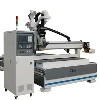
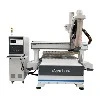
In CNC engraving, material deformation is an important issue that affects machining accuracy, product quality and production efficiency. Material deformation not only leads to unqualified product dimensions, but may also increase material waste and rework costs. Therefore, solving the problem of material deformation is the key to improving CNC machining quality. This article will discuss in detail how to reduce the problem of material deformation in CNC engraving by optimizing cutting parameters, controlling machining temperature, strengthening fixture design, selecting appropriate tools and cutting strategies.
Optimizing cutting parameters
The selection of cutting parameters directly affects the cutting force and heat generation in CNC engraving, thereby affecting material deformation. Reasonable adjustment of cutting speed, cutting depth and feed rate can effectively reduce cutting force and thermal stress, thereby reducing the possibility of material deformation.

Cutting speed: High cutting speed usually leads to the accumulation of cutting heat, increases the thermal expansion of the material, and thus causes deformation. Therefore, reasonably reducing the cutting speed helps to control the temperature rise and reduce the risk of deformation. According to the characteristics of different materials, the cutting speed should be within a suitable range. For example, the cutting speed of aluminum alloy can be appropriately increased, while the cutting speed of cemented carbide materials needs to be reduced to avoid excessive temperature.
Cutting depth and feed rate: Too large cutting depth or too high feed rate will lead to excessive cutting force, thereby increasing the risk of material deformation. Appropriately reducing cutting depth and feed rate can reduce cutting force and prevent the workpiece from being deformed due to excessive stress. During the processing, adopting a strategy of cutting in batches or gradually reducing the amount of cutting can help reduce the occurrence of deformation.
Control Processing Temperature


The heat generated during the processing is an important factor causing material deformation. The accumulation of thermal stress will not only cause local deformation, but also cause deformation of the entire workpiece. In order to solve this problem, the temperature during the processing must be effectively controlled.
Use Of Coolant
Coolant can help take away the heat from the cutting area and prevent overheating. Reasonable selection of coolant and ensuring the uniformity of coolant spraying can help reduce heat accumulation. For processing in high temperature environments, it is particularly important to use an efficient cooling system. The temperature, pressure and flow of the coolant should be adjusted according to the processing technology to avoid local deformation caused by uneven cooling.
Control Of Cutting Zone Temperature
By monitoring the temperature of the cutting zone and adjusting the cutting parameters in time, the situation of over-temperature can be effectively avoided. Advanced CNC systems can detect the temperature of the cutting zone in real time and automatically adjust the processing parameters to maintain the best processing state, thereby reducing deformation.
Strengthen fixture design
The design of the fixture directly determines the stability of the workpiece during the processing. Especially for thin-walled workpieces or workpieces with complex shapes, the fixing force and support force of the fixture are crucial. Unreasonable fixture design may cause the workpiece to bend or deform during the processing.
Fixture fixing force
During the processing, the workpiece needs to be fixed on the fixture to ensure that the position does not change during the processing. The design of the fixture should ensure uniform clamping of the workpiece to avoid deformation caused by improper clamping of the fixture. For example, when processing thin-walled workpieces, special fixtures can be designed to provide stronger support and reduce deformation.
Fixture material and rigidity
The material selection and rigidity of the fixture are also one of the factors affecting the deformation of the workpiece. Fixture materials with higher hardness can provide better support and reduce deformation of the workpiece. The rigidity of the fixture itself should be strong enough to avoid deformation during processing.
Use appropriate tools and cutting strategies
The choice of tools and cutting strategies directly affect the cutting force, cutting temperature and cutting effect of CNC machining, thereby affecting the deformation of the material.
Tool materials and design
For different materials, appropriate tools should be selected. For materials with higher hardness, such as titanium alloy or stainless steel, it is recommended to use carbide tools. Carbide tools have high wear resistance and heat resistance, which can effectively reduce the cutting heat generated during the cutting process, thereby reducing the risk of material deformation.

Cutting strategy
Choose a suitable cutting strategy, especially for the processing of thin-walled parts, a step-by-step processing method can be used. This method can gradually remove material, reduce the cutting force of each cut, and thus reduce the risk of deformation. Reasonable selection of cutting angles, cutting paths and feed strategies can also effectively reduce cutting forces and deformation.
Post-heat treatment and stress release
During the processing, due to changes in cutting force and temperature, the material often generates internal stress. These stresses may cause material deformation after processing. Through post-heat treatment and stress release, the internal stress of the material can be effectively eliminated to prevent it from deformation.
Heat treatment: Heat treatment, such as annealing, can effectively reduce the internal stress of the material. During the annealing process, the material is heated at high temperature and then slowly cooled to change the crystal structure of the material, thereby reducing the internal stress. This helps to reduce the deformation of the material after processing and ensure the stability of the workpiece.
Stress release: In addition to heat treatment, reasonable cooling methods can also help release stress. During the processing, controlling the cooling speed and method to avoid sudden cooling or heating can reduce the generation of thermal stress and reduce the risk of deformation.

Ambient temperature and humidity have a direct impact on the thermal expansion and contraction of the material. In an environment with large changes in temperature and humidity, the material is more likely to deform. Therefore, keeping the temperature and humidity stable in the processing workshop is an effective measure to solve the problem of material deformation.
Environmental temperature and humidity control: The temperature and humidity of the processing workshop should be kept within a relatively stable range. For some materials that are particularly susceptible to temperature and humidity, especially materials such as wood and plastic, changes in temperature and humidity will directly affect their processing accuracy and stability. Regularly monitoring the temperature and humidity of the workshop and making appropriate adjustments are important means to reduce material deformation.
Finally, detailed process planning is also very important to solve the problem of material deformation. Reasonable process flow arrangement and fixture design can effectively avoid material deformation and improve processing accuracy.
Process planning: Before starting processing, a detailed process plan must be formulated based on the shape of the workpiece, material properties and processing requirements. By reasonably arranging the processing sequence and selecting appropriate tools and cutting parameters, deformation during processing can be reduced. In addition, use appropriate fixtures to fix the workpiece to prevent deformation caused by improper clamping.